

Mycelink
My roles :
Level / Game Designer
Project type:
School project
Genre :
Puzzle, platformer
Team of :
6 people
Engine :
Unity
Created :
Duration:
5 months
Context
During my second year at ICAN Lille, we developed a prototype of a physics-based puzzle game over the course of five months. The main idea was inspired by a game concept I had created around Terry Pratchett’s novel Death and What Comes Next, though the project evolved a lot during development. In this project, I learned a great deal about communication within a team as one of the lead designers, and especially about how to share a vision in a way that everyone could understand and agree upon.
My Work
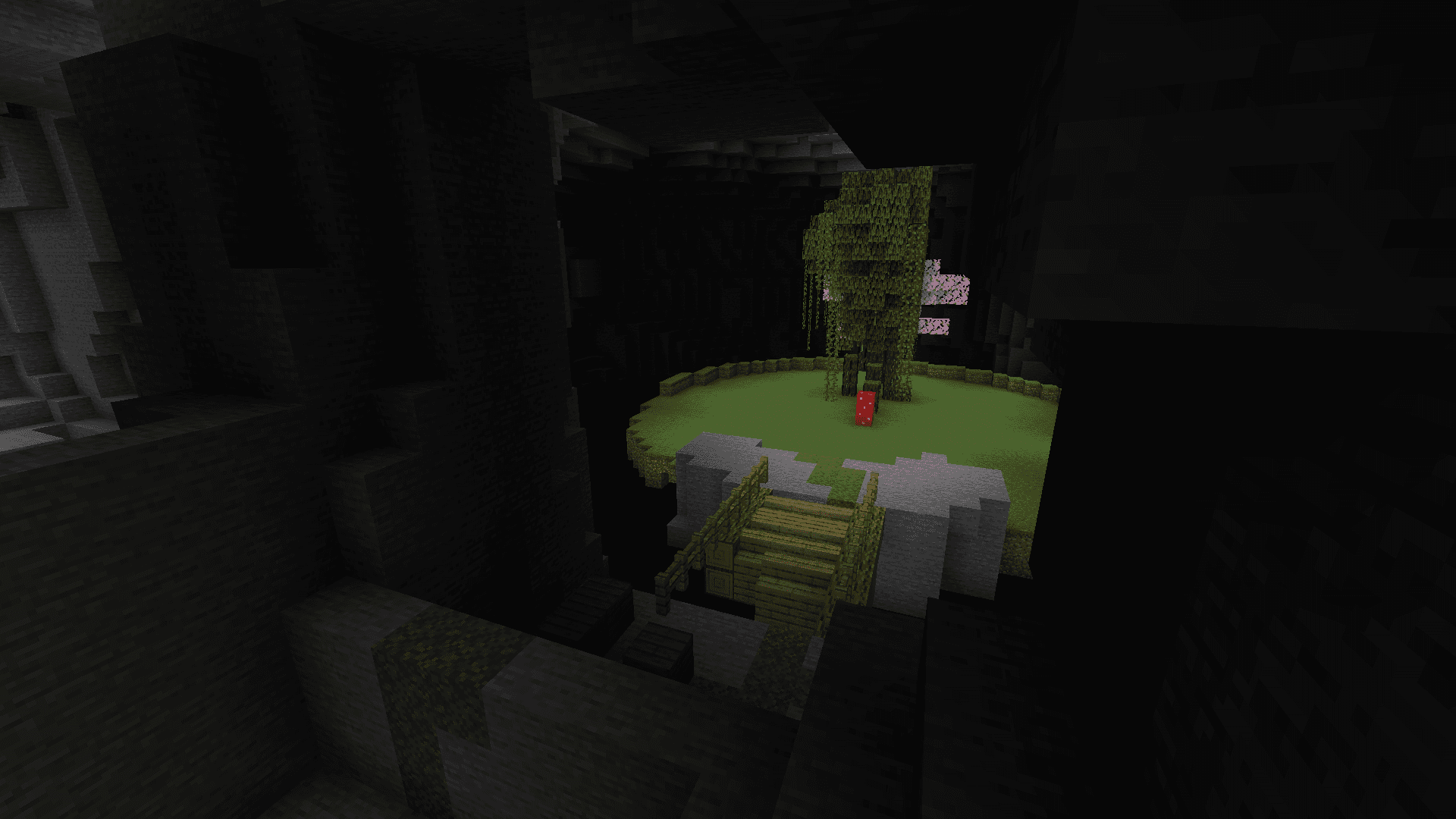
At the start of the project, even before we had a playable prototype, I had the idea of using Minecraft as a level design tool. For 2D platformers, I was used to working with grids (like Excel), and I wanted to adapt this approach to 3D. Minecraft allowed me to define clear metrics such as “the player can jump up to 4 blocks high and 3 blocks long” while building a first visual representation of the game using the diversity of Minecraft blocks. I didn't know the existence of Pro Builder at that time …
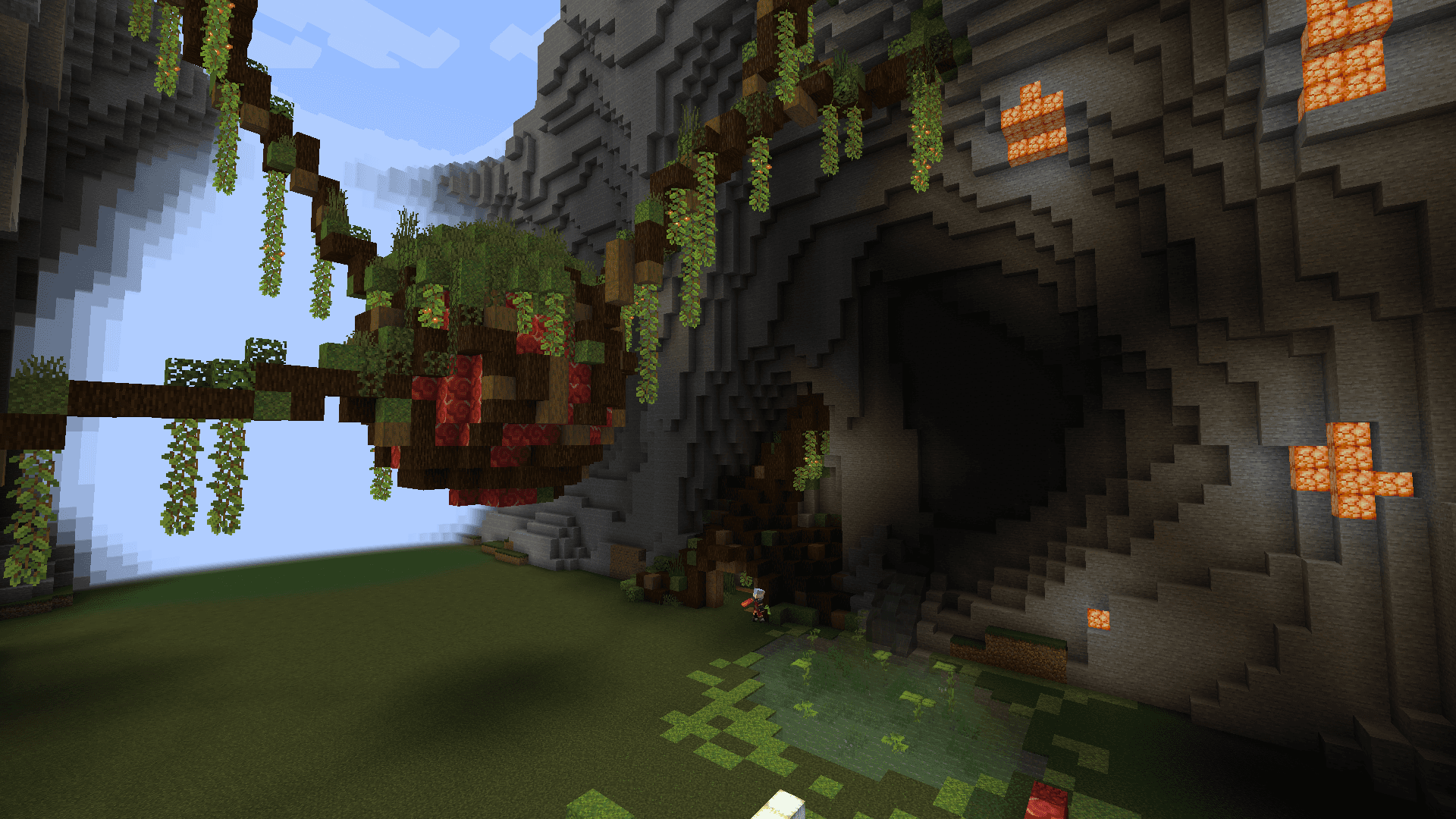
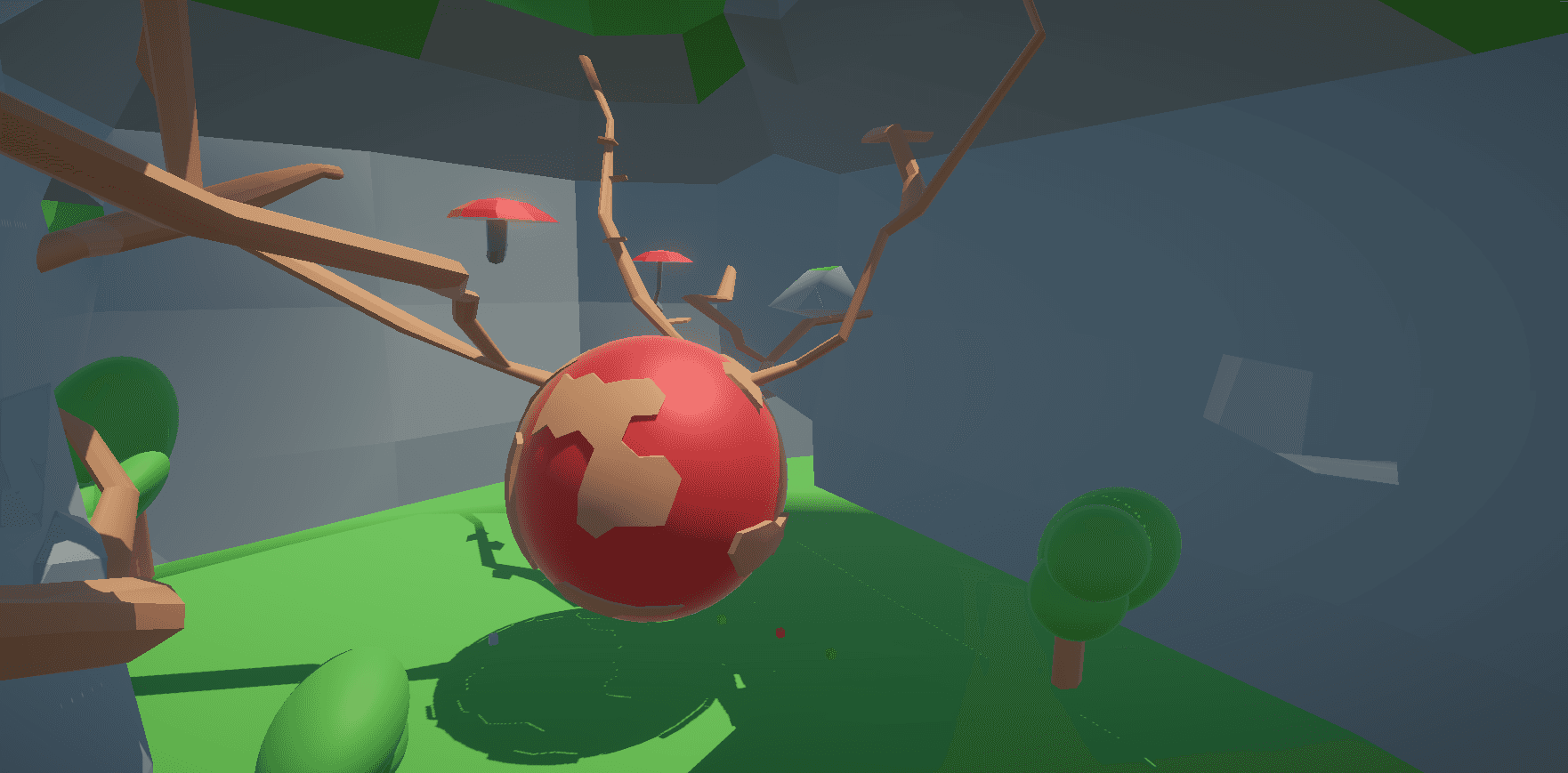
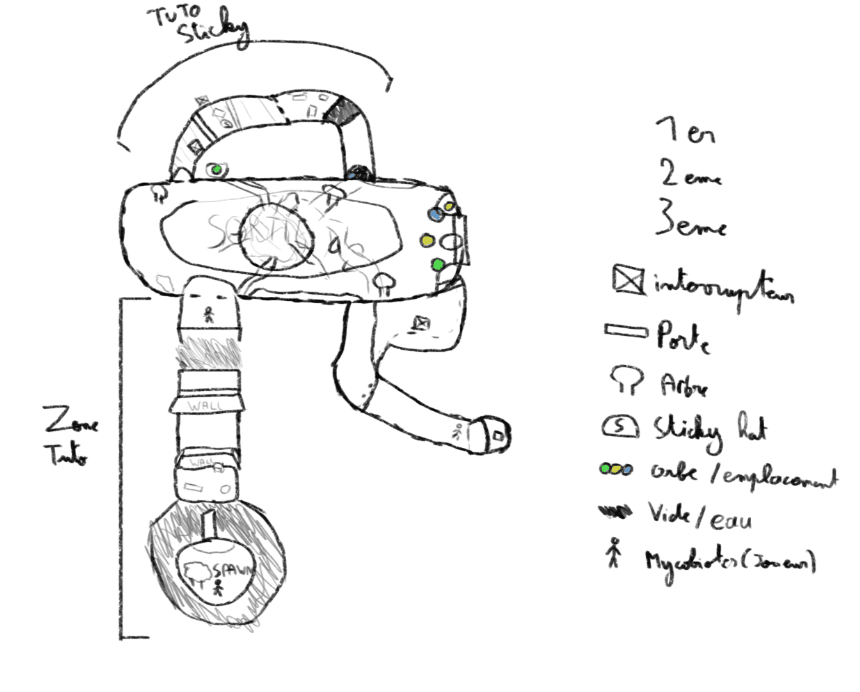
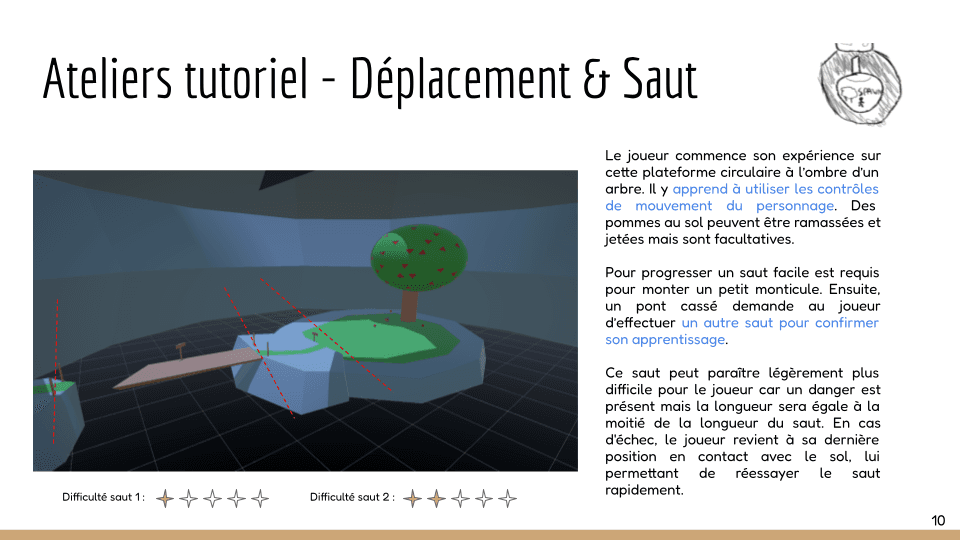
In this project, Antoine Vermesse and I were responsible for the game design and all the phases of the level design within the game. I mainly focused on player onboarding, since the game had systemic gameplay. I also took care of placing and integrating all the assets in-game. Below you’ll see my process. All the sketches and work I share on this page are my part of the project.
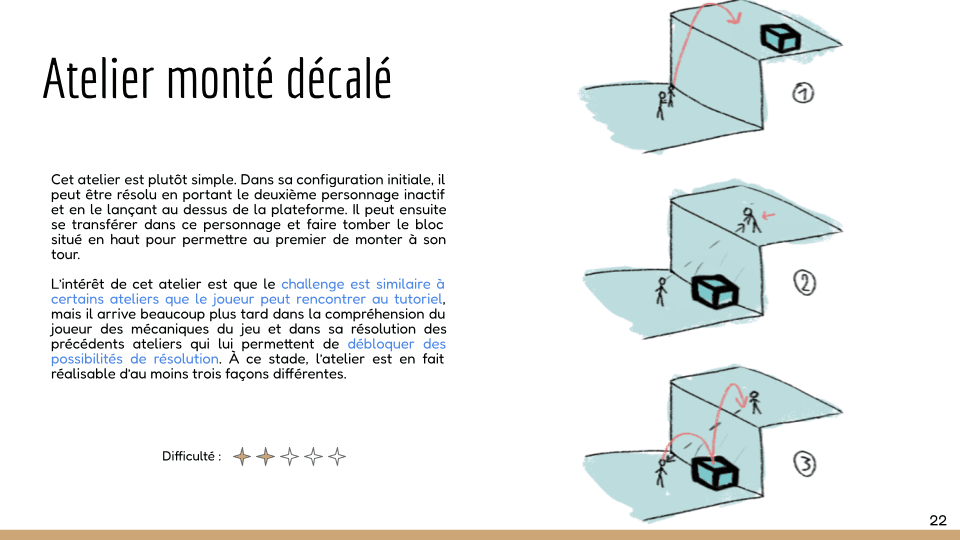
Down below are some pages of the Level Design Document I was in charge of. Its purpose was to map out our reflections on player onboarding and how we introduced the core mechanics, how the learning curve was structured, and how the challenges varied in both appearance and difficulty.

Context and game genre
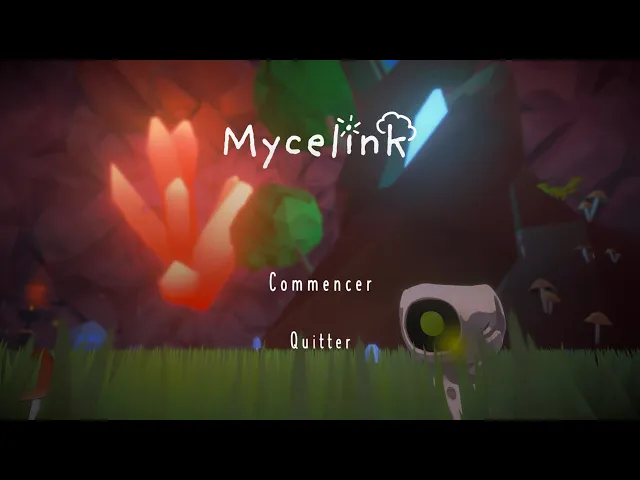
The player embodies a Mycobiote, a small mushroom creature who has just been born into this world. He learns to walk, jump, and use his environment to progress on his journey before encountering his “Mother.” The gameplay is systemic, allowing interactions to emerge naturally from the mechanics.
The game’s progression was built around upgrades that the player could equip as a hat to navigate levels in their own way. The main mechanic we managed to integrate was the sticky mushroom: a power that let players apply a texture to objects, causing them to attach to the first surface they touched. This could be used to activate switches or create makeshift bridges. We had planned additional power-ups, but due to technical challenges and time constraints, we cut the extra content and focused entirely on polishing this one mechanic.

What I learned
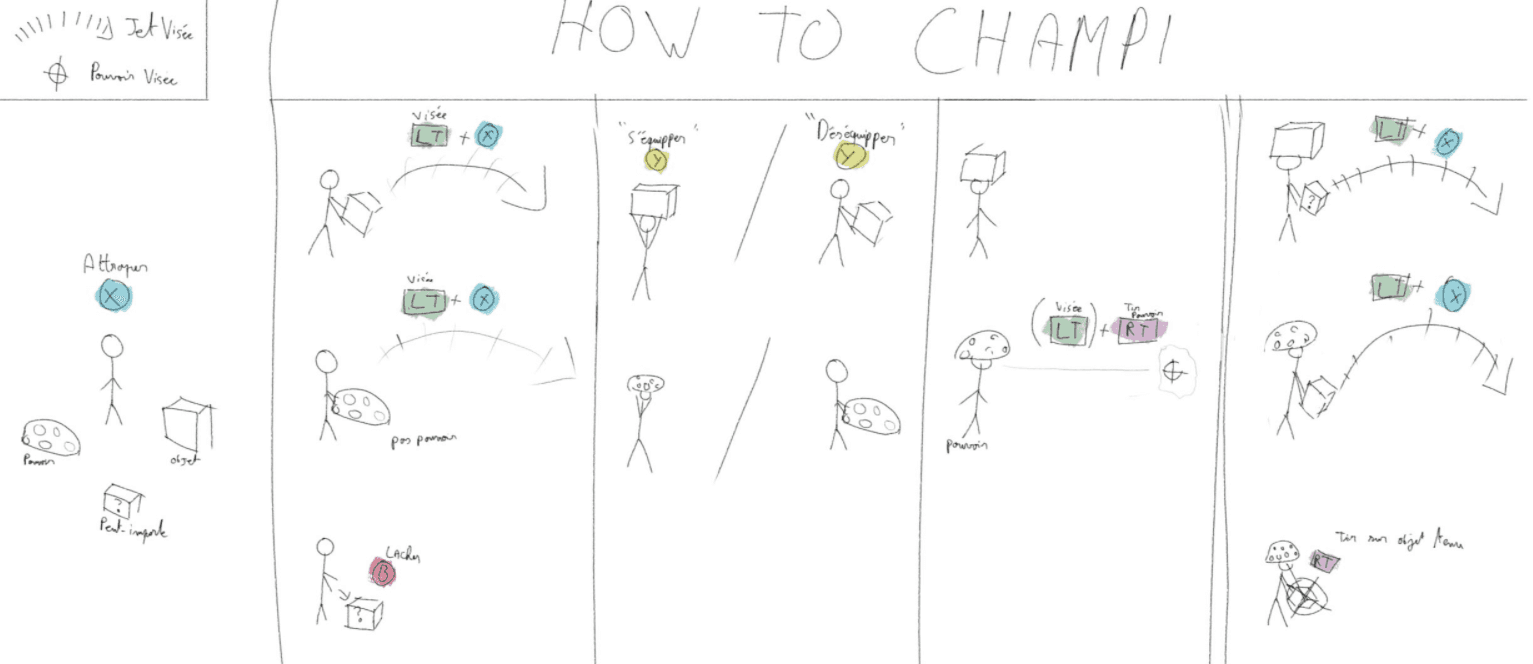
I also learned the hard way that relying only on words makes it very difficult for a team to share exactly the same vision. After countless meetings, I finally understood the saying “a picture is worth a thousand words” through the drawings I made. Once I presented them, everything became clear to everyone. Since then, whenever I need to explain something that could be even slightly ambiguous, I sketch it out and communication instantly becomes much easier.
If there is one thing we failed to achieve in this game, it was balancing the platforming phases. I put our focus on the start of the game, and I didn't take enough time to fix and balance the end phase where the player needs to use everything he learned to escape the cave. I learned that it is important to focus on the start of the game AND the ending alternately so they are of equal quality to make the game entirely satisfying.